
English| EUR
Suggested for you
More currencies
Choose a language
Svalbard sits under Norwegian sovereignty but runs on its own legal code, and a surprising amount of it applies to you the moment you step off the plane. This longyearbyen rules guide sets out what is written into law, what is enforced by the Sysselmesteren, and what is simply expected of anyone who lives here for a week or a decade.
Quick answer
Every visitor pays a mandatory environmental fee of 150 NOK per person, and the town itself is open around the clock, 00:00–23:59, all year. Beyond that, the rules that matter most are the ones outside the settlement boundary: leaving town without polar bear protection is prohibited, and wildlife, plants and cultural remains are protected by law.
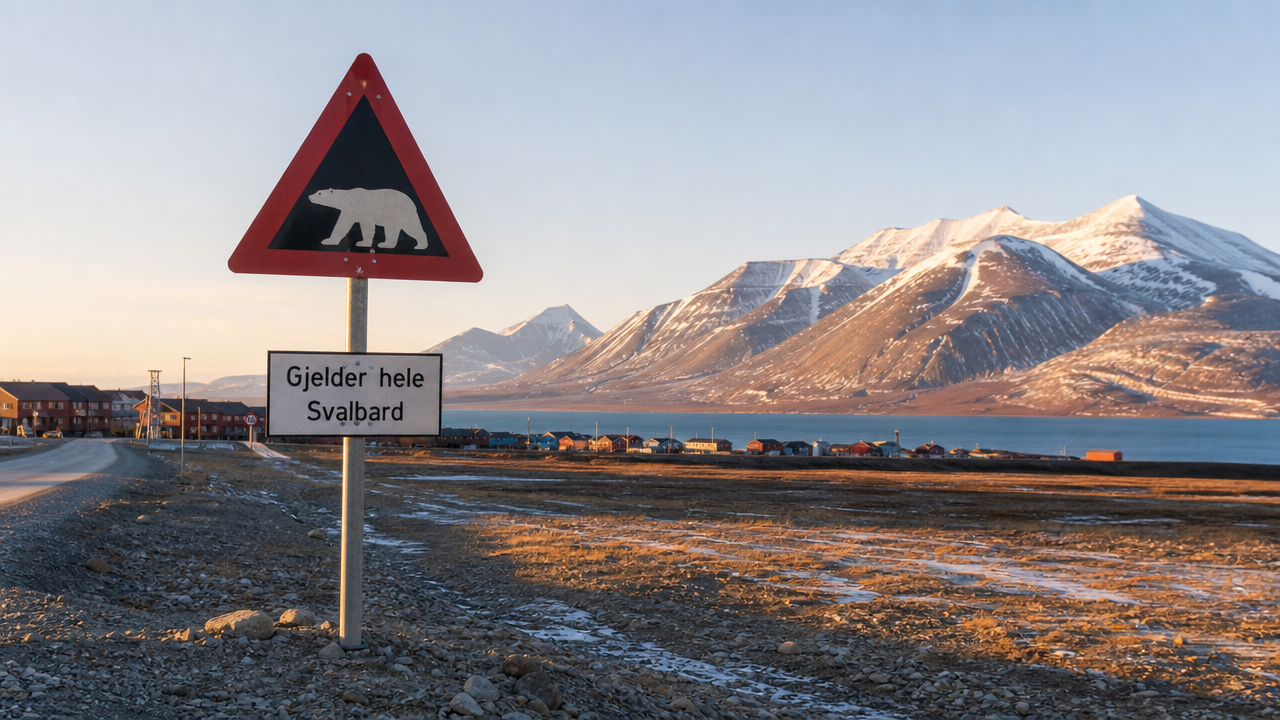
Coal built this place, and coal explains the strangest of the local customs: you take your shoes off indoors. Not in homes only, but in the hotel lobby, the museum, the university centre and most offices. The habit dates to the mining era, when men came off shift carrying black dust into every building. It survives as the first of the unwritten longyearbyen rules a newcomer learns, usually while standing awkwardly in socks by a rack of boots. The written code is stricter than most visitors expect. Svalbard is governed under the Svalbard Treaty and administered by the Sysselmesteren, the governor's office, whose remit covers policing, environmental protection and search-and-rescue across an archipelago of some 61,000 square kilometres. The Svalbard Environmental Protection Act protects all flora, fauna and cultural heritage: anything predating 1946 is automatically a protected relic, which includes rusting mine machinery, timber trapper cabins and the scattered debris that looks like litter but is not. Picking Svalbard poppies, disturbing nesting seabirds, approaching walrus haul-outs and driving snowmobiles across bare tundra are all restricted rather than discouraged. Fines are issued. The defining constraint is the polar bear. Roughly 300 bears use the area around Isfjorden, and there is no fence between them and the town. Inside the settlement, life proceeds normally. Beyond the signposted boundary, Norwegian regulation requires adequate means of frightening and, as a last resort, repelling a bear — in practice a firearm and a flare pistol, plus the training to use them. Tourists cannot simply buy a rifle; they join a licensed guide, which is why nearly all fjord excursions and glacier walks here run as guided trips. A reader planning a first visit should treat the local restrictions as a framework rather than a hurdle. Understanding the svalbard regulations in advance decides the shape of a trip: which valleys are reachable on foot, which require a boat and an armed guide, which seasons open or close the ice. Most of what draws people to these Arctic landmarks lies outside the town limits, so the practical answer to the longyearbyen rules question is usually a booking, made early, with an operator licensed to take you there.
“There is no fence between the town and the bears — only a signpost, and the law that stands behind it.”
Longyearbyen's rules are enforced by the Governor of Svalbard, and breaches carry fines rather than warnings. Polar bear safety and wildlife protection shape almost every regulation visitors encounter.
Administrative services and local authority offices in Longyearbyen maintain consistent accessibility throughout the week.
Longyearbyen is located in the Svalbard archipelago, reachable primarily by air travel from mainland Norway. Most visitors arrive at Svalbard Airport, Longyear, which serves as the main gateway to the town.
Flight from Oslo or Tromsø to Svalbard Airport (LYR)
Airport Express bus to downtown Longyearbyen
Walking from the town center to the harbor
Expedition cruises or local charter vessels to Longyearbyen port
The town is accessible year-round, though the best arrival window is 00:00–23:59. Local activity and transport options depend heavily on the season and the polar night cycle.
Preparation for Longyearbyen starts weeks ahead, because several Svalbard requirements cannot be arranged once you land.
Everything you need to know about longyearbyen rules
Visitors must adhere to strict longyearbyen rules to protect the fragile Arctic environment and wildlife. These guidelines prioritize safety and conservation, ensuring that the town remains a sustainable destination for all. Always check the official Sysselmesteren website for the most recent updates on local policies.
Yes, all visitors are required to pay a mandatory environmental fee of 150 NOK per person. This contribution supports essential conservation efforts in the region and is a key part of your legal requirements. You can manage your administrative obligations through official local channels.
The most critical of the longyearbyen rules involves polar bear safety and keeping a safe distance from all local fauna. It is strictly prohibited to disturb, bait, or approach wildlife, and carrying appropriate safety equipment is essential when leaving the settlement. Always stay informed about regional security protocols before planning any excursions.
When planning a boat tour, you must follow the longyearbyen rules regarding maritime safety and environmental protection. Operators are regulated to ensure minimal impact, so choose certified providers that respect these standards. Proper booking ensures your activities are logged and compliant with local authorities.
The town is accessible year-round, so the best arrival window is 00:00–23:59. While infrastructure remains open throughout all seasons, your specific activity options will fluctuate based on the time of year and weather conditions. Always monitor local transit schedules when planning your travel.
While there are no restricted hours for movement, the polar night environment requires extra caution and specific gear. Most longyearbyen rules focus on safety precautions rather than time-based bans, but navigating in total darkness requires experience. Ensure you are well-prepared for the arctic climate before venturing outside the main settlement.
Svalbard Boat Tours
Read more GuideHow to Get to Longyearbyen
Read more GuideLongyearbyen Weather Guide
Read more GuideCruise Ship Schedule
Read more Tickets & toursPyramiden & Glacier Boat Tour
Read more Tickets & toursBarentsburg Boat Trip
Read more Tickets & toursWinter Boat Trips
Read more